
HISTORICAL PROVENANCE & OBJECT RESEARCH
Historical Provenance & Object Research
Documenting origins, ownership history and historical context.
Objects, archives and collections can carry complex histories through inscriptions, names, correspondence, family memory and surviving records. Ottoman Research investigates those documentary traces and distinguishes documented evidence from interpretation and unresolved questions.
- Evidence-led
- Source-referenced
- Confidential
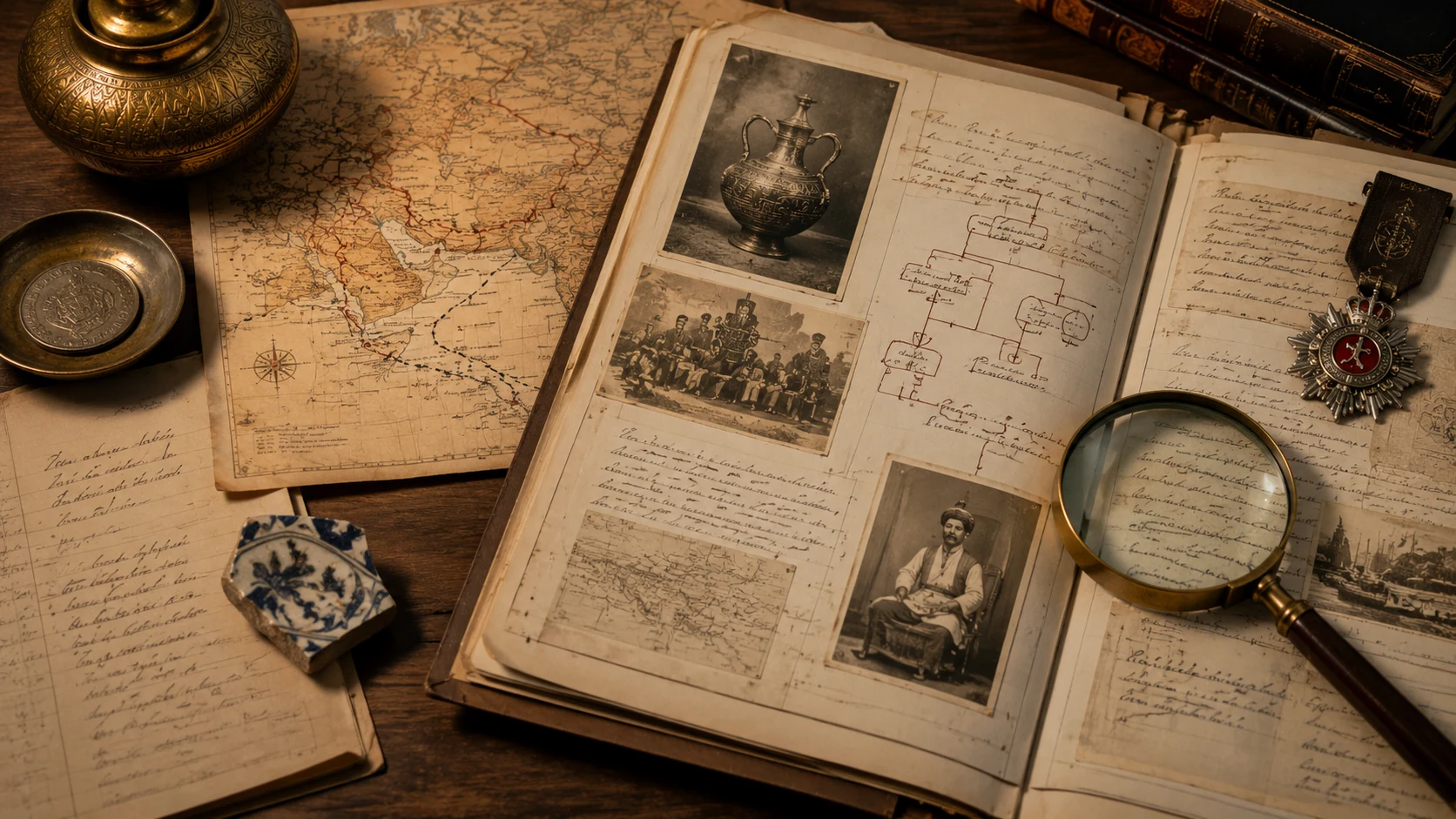
WHAT WE RESEARCH
Documentary histories of objects, archives and collections.
Research is scoped around the object, available documentation and the historical question. Findings distinguish what the sources document from what remains interpretive or unresolved.
Historical Provenance
Research the documented history, movement and historical setting of an object, manuscript, archive or collection.
Ownership History
Trace historical owners, custodians, family connections and collection references where surviving documentation permits.
Inscriptions & Marks
Examine inscriptions, annotations, seals, stamps, names and marks for historically relevant evidence and context.
Document & Object Context
Place an object or document within its period, place, institutional setting and related documentary environment.
Archival Corroboration
Cross-reference archives, correspondence, catalogues and documentary references that may support or qualify a provenance question.
Comparative Historical Analysis
Compare names, dates, terminology, images, records and related material to build a more coherent historical interpretation.
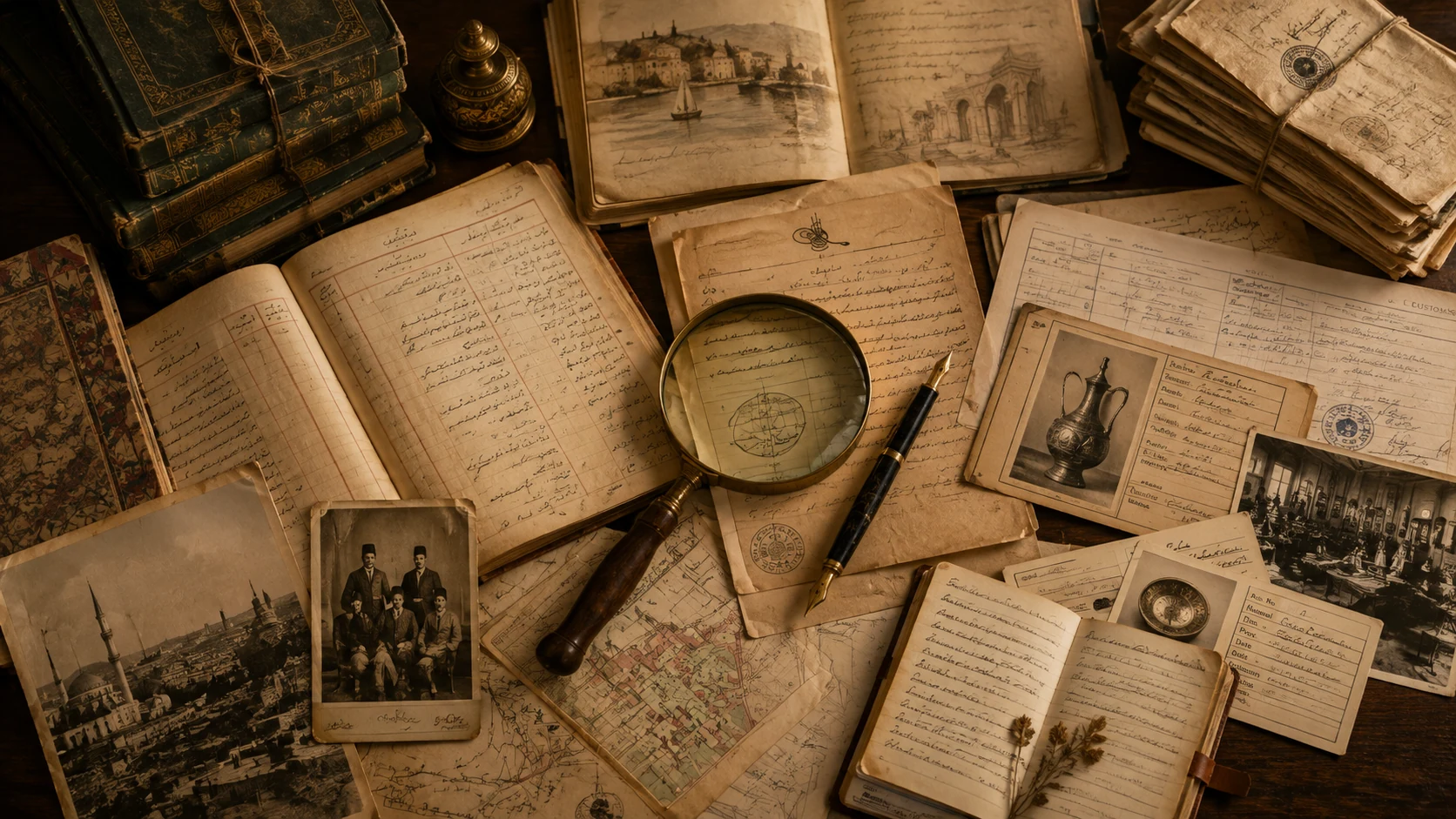
MATERIALS
Objects and documentary material that may form part of a provenance enquiry.
The relevant evidence varies by object, period and location. Research may involve a combination of the object itself, associated family or collection material and independent archival sources.
- Manuscripts and historical books
- Maps and plans
- Seals and inscribed items
- Medals and decorations
- Historical photographs
- Letters and correspondence
- Religious manuscripts
- Family archives
- Private historical collections
- Related documentary material
RESEARCH QUESTIONS
What can the surviving documentary record help clarify?
Historical provenance work is often built around a focused question rather than an assumption about authenticity, ownership or value.
- What is the object or document?
- When was it created or used?
- Who owned, held or transmitted it?
- Who is named in the material?
- What does an inscription, annotation or mark mean?
- Can archival evidence establish historical context?
- Can ownership or transmission be traced through surviving records?
DELIVERABLES
Clear, source-referenced outputs for the agreed research scope.
Depending on the available material and the written scope, a provenance project may produce one or more of the following research outputs.
Provenance Timeline
A chronological outline of documented ownership, custody, movement or collection history where the evidence supports it.
Contextual Report
A written account of findings, historical context, evidential limits and unresolved questions.
Archival References
Organised references to archives, catalogues, correspondence and other documentary material consulted.
Inscription Translation
Transcription, translation or interpretation of relevant inscriptions or documentary text where included in scope.
Document Comparison
Comparative analysis of related records, names, images, marks, dates or documentary evidence.
Historical Summary
A concise evidence-led summary of what the available historical material establishes, suggests or leaves unresolved.
IMPORTANT SCOPE NOTE
Historical provenance research has defined professional limits.
Historical provenance research is not a financial valuation, appraisal or guarantee of authenticity unless separately provided by an appropriately qualified specialist.
OBJECT OR ARCHIVE RESEARCH
Place an object, archive or collection within its documented history.
Share clear images, known history, inscriptions, labels and any related documents for written review. If the enquiry is suitable, a defined scope and quotation can then be prepared.