
SPECIALIST RESEARCH SERVICE
Genealogy &
Family History
Tracing families through documentary evidence across the Ottoman world.
We investigate people, relationships, names, places and chronology through surviving historical records, distinguishing documented evidence from interpretation and family tradition.
- Documentary
- Discreet
- Scope-defined
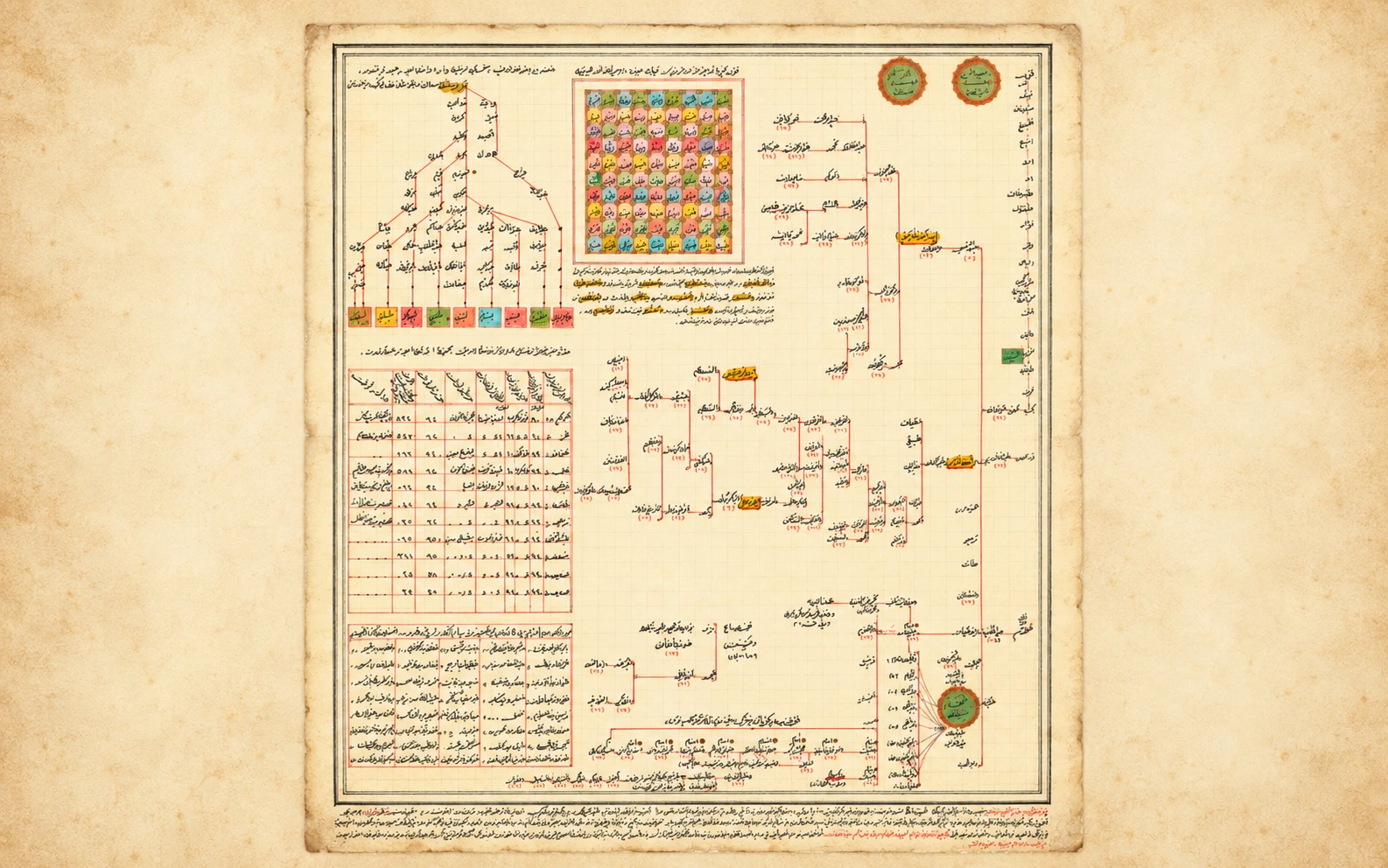
WHAT WE RESEARCH
Reconstructing family history through evidence.
Each enquiry begins with a defined question and develops only as far as the surviving record can responsibly support.
Family Relationships
Assess documented relationships between parents, children, spouses, siblings and wider family connections.
Birth, Marriage & Death Evidence
Examine surviving evidence for family events and chronology without assuming that every record set survives.
Population Registers
Use relevant population material to investigate people, households, places and family structure where available.
Names and Identities
Compare names across languages, scripts, dates, places and relationships rather than relying on name similarity alone.
Places and Migration
Trace historical place names, changing boundaries and documented movements that shaped a family history.
Multi-generational Reconstruction
Combine evidence across periods to reconstruct supported relationships while identifying gaps and uncertainty.
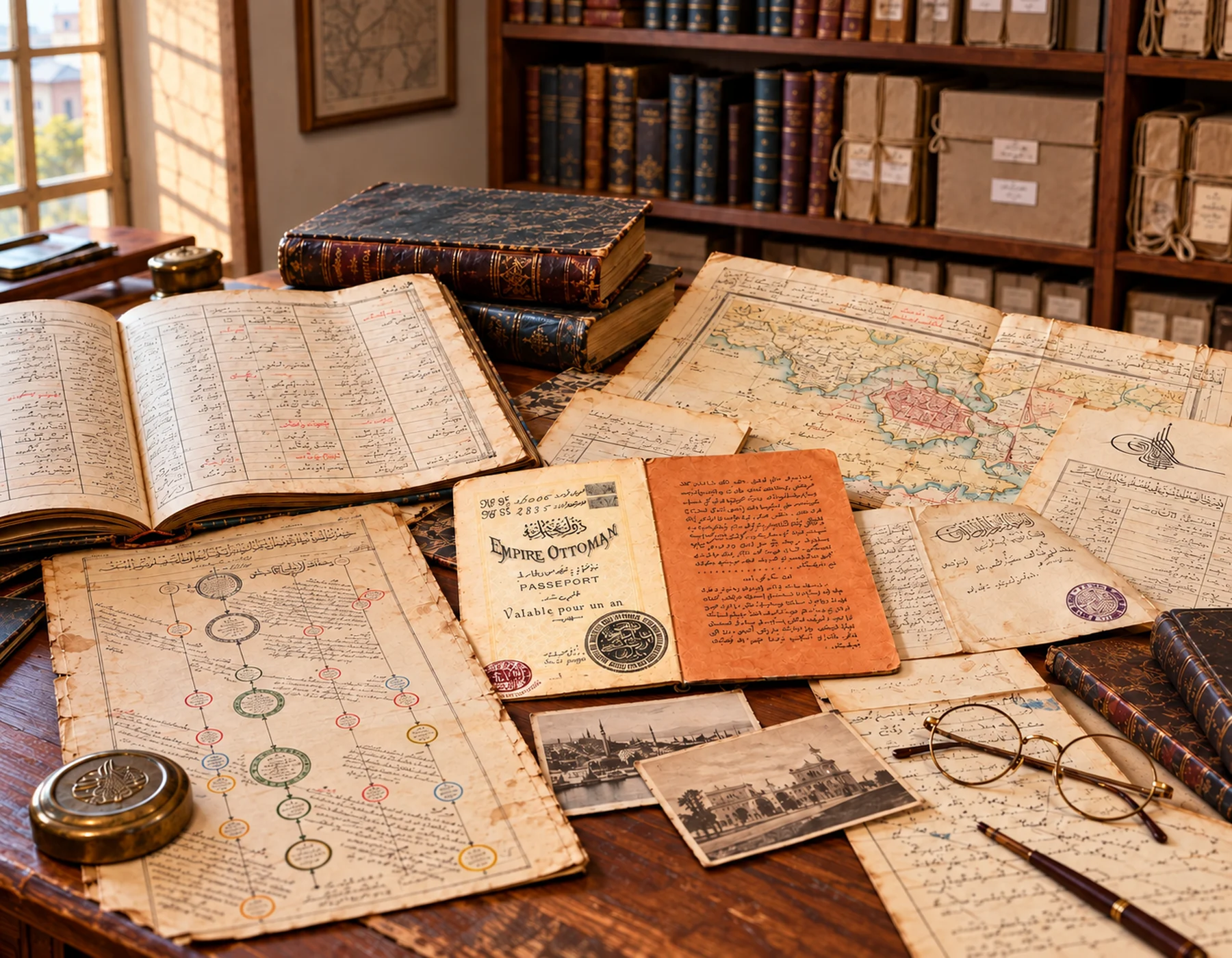
SOURCES WE MAY CONSULT
The right records depend on the question.
Depending on the period, location and surviving record set, research may consult sources including:
- Ottoman population registers
- Court records
- Land and property records
- Military records
- Administrative archives
- Religious or community sources where relevant and available
- Newspapers and directories
- Migration or foreign records where relevant
No single category is assumed to survive for every family, place or period.
WHAT CLIENTS MAY RECEIVE
Findings organised for clarity and future reference.
Depending on scope and available evidence, project deliverables may include the following. Not every project includes every output.
Family reconstruction
A family tree or relationship chart where the surviving evidence supports one.
Documented report
A clear account of the question, sources considered, findings, context and limitations.
References and archival images
Source references and record images where access, permissions and the agreed scope allow.
Transcription and translation
Transcription, transliteration or translation of relevant historical documents where required.
Historical narrative
A contextual chronology connecting people, places and events without overstating the record.
Unresolved questions
A transparent record of gaps, conflicting evidence and questions that may need further research.
WHO THIS SERVICE IS FOR
Documentary research for personal and professional questions.
Individuals
People seeking a documentary account of an ancestor, relationship, place or family question.
Families
Families wishing to preserve and clarify shared history through documented evidence.
Diaspora Descendants
Descendants exploring family connections across changing borders, languages and migrations.
Professional Researchers
Researchers and professionals who need carefully scoped genealogical or contextual support.
RESEARCH LIMITATIONS
Evidence first. Uncertainty stated clearly.
Historical records can be incomplete, inconsistent or unavailable. Spellings and identities may vary across languages, scripts and sources, and some relationships cannot be proven.
Findings are not guaranteed. Ottoman Research distinguishes documented evidence from inference, explains conflicting material and records the questions that remain unresolved.
Case Study
Tracing an Ottoman Armenian Family from the Balkans to the United States
Ottoman-period archival material preserved in Bulgaria and relevant Ottoman records supported the detailed reconstruction of an anonymised Armenian family history. The research documented family relationships, connections with the Balkans and later migration to the United States.
Read Case Study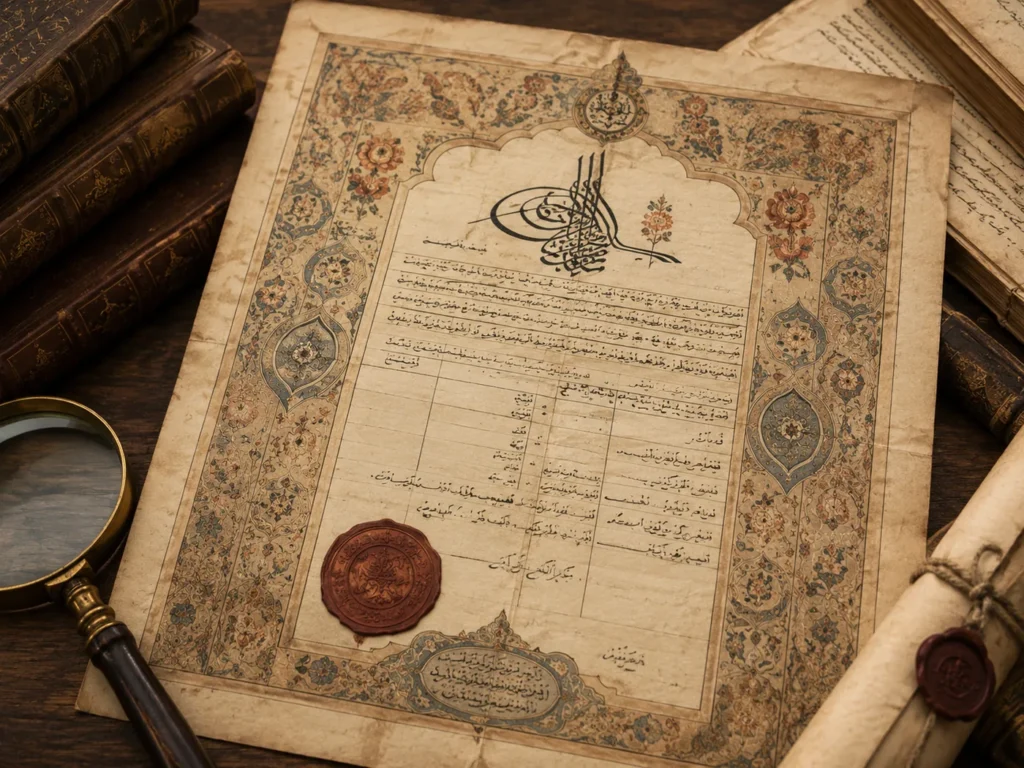
GENEALOGY QUESTIONS
Before you begin.
Answers about sources, evidence, uncertainty and possible project outputs.
What information should I provide when starting?
Known names, approximate dates, places, family relationships, previous research and document copies can all provide a useful starting point. Uncertain details can be marked as approximate.
What kinds of records may be available?
Availability depends on the period, location, community and surviving record set. Relevant material may include population, court, land, administrative, military, community, newspaper, directory or migration records.
Can you research an ancestor if I know very little?
Sometimes. A name, place, date range, family document or oral account may provide a starting point, but feasibility can only be assessed against the available evidence and an agreed scope.
Can family relationships always be proven?
No. Historical records may be incomplete, inaccessible or inconsistent. Conclusions are limited to what the evidence can responsibly support.
What happens when records conflict?
Conflicting details are compared with dates, places, relationships and other identifying evidence. The report distinguishes documented findings, interpretation and unresolved uncertainty.
Can spelling and name variations affect research?
Yes. Names may vary across languages, scripts, transcription practices and historical periods, so identity is assessed through several points of evidence.
What may a finished research project include?
Depending on scope and available evidence, deliverables may include a report, family reconstruction, references, archival images where permissible, transcription, translation, historical context and unresolved questions.
BEGIN WITH WHAT YOU KNOW
Tell us what you already know.
Share the names, places, dates, documents or family information that can help define a written research enquiry.