
Case Study
Documenting Lineage in Ottoman Medina Through Archival and Waqf Records
A private lineage enquiry required detailed research across Ottoman records relating to Medina, waqf administration and recorded family status. The investigation documented the ancestor’s connection with Medina and earlier Ottoman territories and identified documentary evidence recording the ancestor as a Seyyid within the historical Ottoman record.
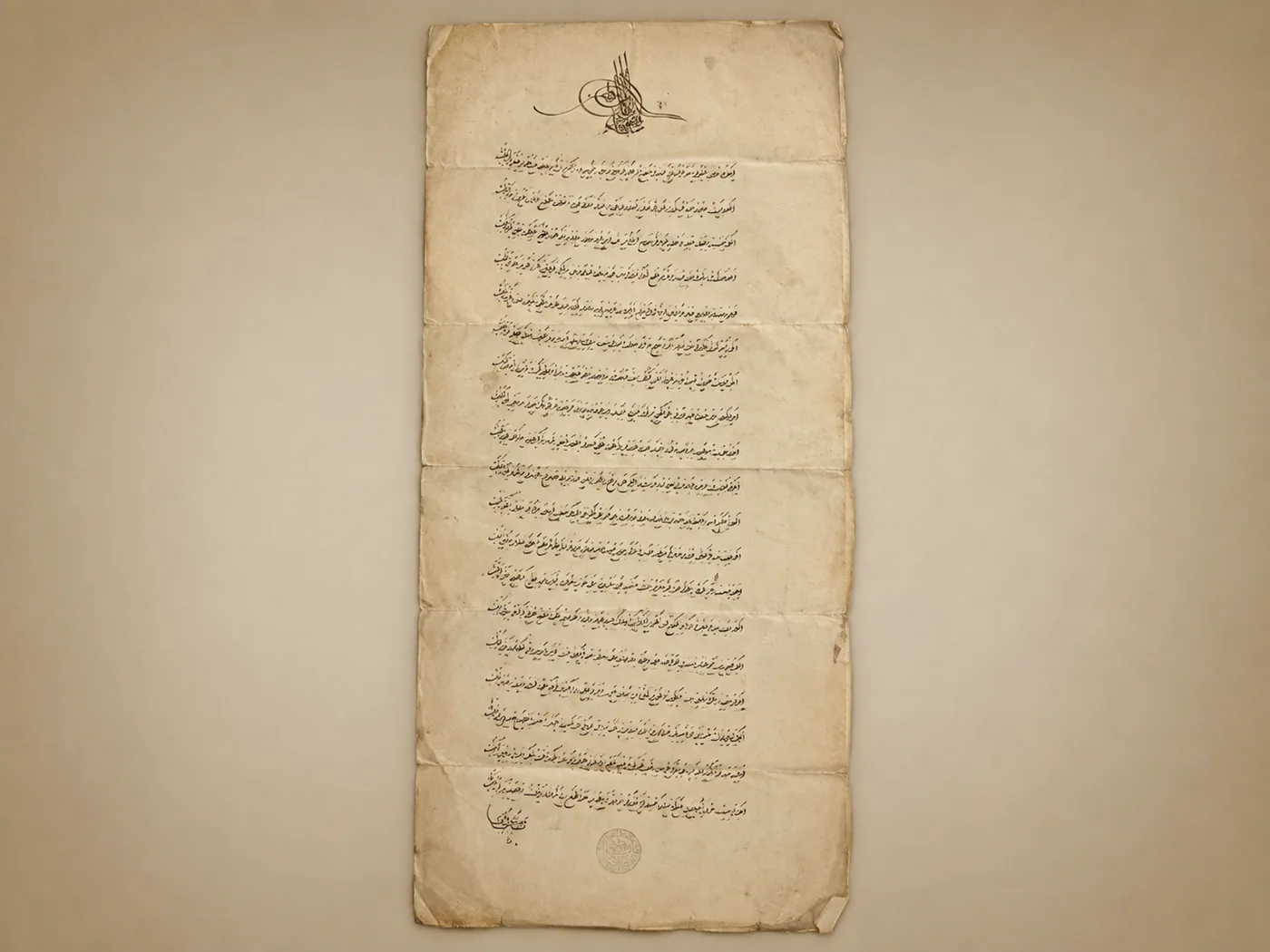
1. The Question
The project concerned an established family-lineage question connected with Medina and the wider Ottoman historical record.
The research needed to determine what surviving documentation could establish about an ancestor’s presence in Medina, earlier connections with other Ottoman territories and recorded lineage status. This required more than repeating a family tradition. The enquiry called for a comparison of lineage, court, waqf and Haremeyn-related sources capable of placing the ancestor within a documented historical setting.
A particularly sensitive part of the question concerned whether the ancestor was documented as a Seyyid. The objective was to establish what the relevant historical records documented about the ancestor—not to make a genetic, biological or universal religious determination.
2. What Was Known
The enquiry was supported by substantial family and historical material already available to the client. This included an existing genealogy question and documentation connected with the family’s historical relationship to Medina.
The starting material provided a framework for identifying names, relationships and possible documentary connections. It also raised questions that could not be resolved through family-held material alone.
Family genealogies and lineage traditions may preserve important historical information, but their evidential status must be assessed against contemporary or related records. The research therefore treated the supplied lineage material as a structured starting point and sought evidence within relevant Ottoman sources.
Private family names and client-supplied lineage documents remain outside this public account.
3. Research Strategy
The research strategy brought together four confirmed source families:
- Nakibüleşraf Defterleri;
- Medine Şer‘iyye Sicilleri;
- Haremeyn Muhasebe Defterleri;
- Cevdet Evkaf material.
Each source family addressed a different part of the historical question. The research examined how names, family relationships, location, waqf connections and recorded lineage information appeared across the available documentation.
Nakibüleşraf material was central to the lineage question. It was considered alongside Medina court records rather than treated as an isolated source capable of resolving every aspect of the family history.
Haremeyn-related accounting material and Cevdet Evkaf records provided further administrative and waqf contexts through which the ancestor’s documented connections could be assessed.
The method depended on cross-referencing. A name or status description found in one context needed to be considered alongside location, chronology and related documentary information. This helped distinguish a supported connection from a coincidental similarity.
The resulting findings were classified according to what the records directly established, what they supported and what remained beyond the available evidence.
4. Sources Consulted
Nakibüleşraf Defterleri
These records were examined for documentary information relating to recorded lineage and status. Their use in this case formed part of a wider assessment and was not treated as a substitute for contextual analysis.
Medine Şer‘iyye Sicilleri
The Medina court records provided locally relevant documentary material through which the ancestor’s presence, relationships and historical setting could be considered.
Haremeyn Muhasebe Defterleri
Haremeyn-related accounting records contributed administrative context relevant to the research question and the ancestor’s documented connections.
Cevdet Evkaf Material
Waqf-related material was used to examine the historical endowment context and related documentary connections.
The sources were interpreted together. No single category was presented as universally decisive outside the specific historical evidence it contained.
5. Discoveries
The research documented that the ancestor lived in Medina. It also established that the individual had earlier connections with Ottoman territories.
These findings created a documentary bridge between the Medina context and the ancestor’s earlier Ottoman connections. The result was not merely a geographic association; the available records supported a historical sequence grounded in the material examined.
The investigation also identified documentary evidence recording the ancestor as a Seyyid within the historical Ottoman record.
This conclusion is deliberately precise. It records a documentary historical finding derived from relevant lineage and Ottoman records. It is not presented as genetic or biological proof, and it does not claim to issue a universal religious determination.
The value of the finding lies in showing what the historical record documents. Family tradition, documentary lineage and later personal interpretation remain distinct categories.
By examining lineage material alongside court, waqf and Haremeyn-related records, the research produced a more complete historical account than any one source family could have provided alone.
6. Documents Located
The investigation identified documentary evidence relating to:
- the ancestor’s connection with Medina;
- earlier connections with Ottoman territories;
- documentary evidence recording the ancestor as a Seyyid within the historical record;
- associated court, waqf and Haremeyn contexts.
Copies of relevant documentary evidence were prepared for delivery to the client. Transcriptions were also produced so that the content could be read and analysed alongside the document images.
No private family names, client-supplied lineage papers or identifying document references are reproduced in this public Case Study.
7. Historical Context
Medina occupied an important position within the Ottoman administrative and religious landscape. Research concerning people connected with the city may therefore extend across local court documentation, Haremeyn administration, waqf records and lineage-related registers.
These records were created for different purposes. A court entry, accounting record, waqf document and lineage register should not be expected to present the same information in the same form. Their value emerges through careful comparison and historical interpretation.
Nakibüleşraf research requires particular precision. The appearance of a person within relevant documentary material is historically significant, but the conclusion must remain tied to the record and its context. Register research should not be transformed into an unlimited statement about biology, genetics or religious authority.
In this project, the sources were used to reconstruct the ancestor’s documented historical position: residence in Medina, earlier Ottoman connections and the documentary evidence recording the ancestor as a Seyyid.
8. Outcome
Research across Nakibüleşraf Defterleri, Medine Şer‘iyye Sicilleri, Haremeyn Muhasebe Defterleri and Cevdet Evkaf material documented the ancestor’s relationship with Medina and earlier Ottoman territories.
The investigation also identified documentary evidence recording the ancestor as a Seyyid within the historical Ottoman record. This conclusion was presented specifically as a source-based historical finding.
The client received copies of the relevant documentary evidence, transcriptions and detailed analysis. The completed findings were organised into an approximately 100-page written research report.
The report distinguished documented evidence from broader family interpretation and recorded the historical limitations of the surviving material. It did not claim genetic proof or issue a universal determination of religious lineage.
Related Research Areas
LINEAGE & FAMILY HERITAGE
OTTOMAN ARCHIVAL RESEARCH
Documentary lineage research may draw on family material, historical registers, court records, waqf sources and wider archival evidence according to the question and surviving documentation.
START YOUR OWN RESEARCH ENQUIRY
Have a related historical question?
Provide the available family information, approximate dates, places and relevant documents in writing. Ottoman Research will review the material before proposing any research scope and quotation.
—
Private Historical & Archival Research