
Case Study
Reading and Translating a 550-Page Text Associated with Barbaros Hayreddin Pasha
This major historical-document project involved an original Ottoman text associated with Barbaros Hayreddin Pasha and extending to approximately 550 pages. The work combined Ottoman-text reading, Latin-alphabet transliteration, modern-language rendering and English translation.
1. The Question
The project centred on how a substantial Ottoman text could be read and rendered accurately across several connected editorial stages.
At approximately 550 pages, the material required more than the translation of isolated passages. The work needed to maintain consistency across a long text while preserving the relationship between the Ottoman wording, its Latin-alphabet transliteration, a modern-language rendering and the final English translation.
The task therefore involved both linguistic interpretation and long-form documentary discipline. Each stage needed to remain traceable to the source text without allowing uncertain readings or contextual judgements to become more definite than the material permitted.
The text was described in controlled terms as being associated with Barbaros Hayreddin Pasha. No claim concerning authorship, date, provenance or bibliographical priority forms part of this Case Study.
2. What Was Known
The principal material was an original Ottoman text of approximately 550 pages associated with Barbaros Hayreddin Pasha.
Its scale was known from the outset and shaped the research approach. A document of this length could not be treated as a sequence of unrelated extracts. Terminology, names, repeated expressions and historical references needed to be handled consistently across the whole work.
The required outputs were also defined: reading the Ottoman text, transliterating it into the Latin alphabet, producing a modern-language rendering and preparing an English translation.
Other details were not assumed. This public account does not assign the text an exact date or document type, identify a repository, describe its archival provenance or claim that it was written personally by the historical figure with whom it was associated.
3. Research Strategy
The work proceeded as a connected documentary and linguistic process.
The first stage was sustained reading of the Ottoman text. Historical Ottoman texts require attention to orthography, word boundaries, grammatical structure and the relationship between a passage and its wider context. Where a reading depended on context, the surrounding text had to be considered before a settled rendering could be adopted.
The second stage was Latin-alphabet transliteration. This created a structured representation of the Ottoman wording and provided an intermediate layer between the source text and later renderings. Consistency was important: recurring names, terms and expressions needed to be treated coherently across approximately 550 pages.
The third stage was modern-language rendering. This allowed the historical wording to be expressed in a form more accessible to a modern reader while retaining the meaning and structure of the source as far as the material allowed.
The fourth stage was English translation. The translation required judgement about terminology, syntax and historical context rather than mechanical word substitution. The objective was readable English that remained accountable to the Ottoman text and the preceding transliteration and modern-language work.
Across all stages, the scale of the material required systematic editorial control. Decisions made in one part of the text needed to remain compatible with later and earlier passages.
4. Sources Consulted
The approximately 550-page Ottoman text was the principal documentary source for the project.
The reading, transliteration and translation were grounded in that text. Historical and linguistic context informed interpretation where required, but this Case Study does not claim the use of a named archive, additional manuscript collection or specific supplementary series.
The source is described only as an original text associated with Barbaros Hayreddin Pasha. No further provenance, authorship or dating claim is introduced.
5. Discoveries
In a project of this kind, the principal achievement was not a single isolated discovery. It was the sustained recovery and rendering of meaning across a large body of Ottoman text.
Reading the material made its content accessible at the textual level. Transliteration then created a Latin-alphabet representation that retained a close relationship with the Ottoman wording. The modern-language treatment provided a further interpretative layer, while the English translation opened the material to an English-reading audience.
Working across approximately 550 pages also allowed recurring language and terminology to be handled as parts of a coherent text. A term encountered early in the work could be reassessed in light of later usage, while repeated expressions could be rendered consistently rather than translated differently in isolation.
The process required textual and linguistic judgement, particularly where older terminology or sentence structure did not correspond neatly to modern usage. Such decisions were made within the context of the text rather than presented as detached readings.
No claim is made that this was the first translation, the first complete transliteration or the first modern rendering. The documented significance of the project lies in the scale and range of the work actually completed.
6. Documents Located
The central documentary object was the original Ottoman text itself, comprising approximately 550 pages.
This Case Study does not claim that additional documents were located or that the text came from a particular repository. Its physical or archival provenance is not part of the presently authorised public account.
The document provided the basis for all four principal outputs:
- Ottoman-text reading;
- Latin-alphabet transliteration;
- modern-language rendering;
- English translation.
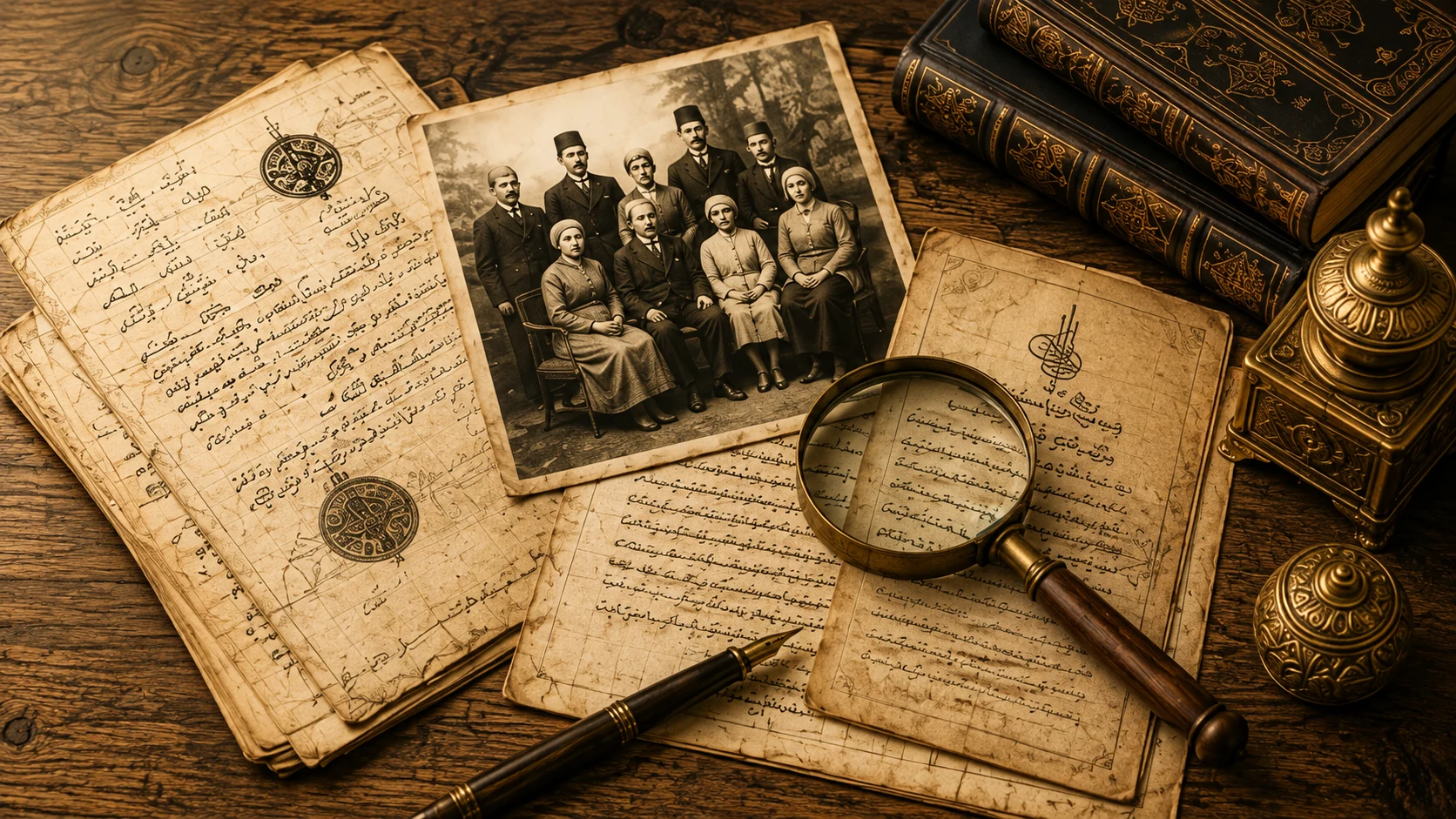
Any future use of genuine page images would require separate confirmation of publication rights and an accurate, publication-safe caption.
7. Historical Context
Historical Ottoman texts frequently require several layers of editorial work before they can be used confidently by a modern reader.
Reading establishes the textual content. Transliteration represents the Ottoman wording in another alphabet. A modern-language rendering addresses differences between historical and contemporary usage. Translation then carries the meaning into another language, requiring decisions about terminology, syntax and context.
These stages are related but not interchangeable. A transliteration is not itself a translation, and a readable translation does not remove the value of preserving a closer representation of the source wording.
The historical association with Barbaros Hayreddin Pasha also required restraint. Well-known historical figures can attract assumptions about authorship, provenance or documentary importance that exceed the available evidence. The project therefore retained the controlled description “associated with” rather than converting that relationship into an unsupported claim.
The combination of close textual reading, linguistic analysis and historical awareness allowed the text to be handled as a coherent documentary work rather than a collection of disconnected passages.
8. Outcome
Approximately 550 pages of Ottoman text were read and rendered through a structured sequence of Latin-alphabet transliteration, modern-language treatment and English translation.
The completed work made the text accessible in multiple forms while preserving a clear relationship between the original Ottoman material and its later renderings. Long-form consistency in terminology and interpretation formed an important part of the delivery.
The outcome is limited to the work confirmed for this project. It does not establish an exact date, repository, archival provenance or authorship for the text. It also makes no claim of bibliographical priority, uniqueness or first translation.
The project demonstrates the sustained documentary, linguistic and editorial work required when a substantial Ottoman text must be read, interpreted and translated as a complete historical source.
Related Research Areas
HISTORICAL DOCUMENTS & TRANSLATION
OTTOMAN ARCHIVAL RESEARCH
Historical-document projects may combine reading, transcription or transliteration, translation and contextual research according to the language, material and agreed scope.
START YOUR OWN RESEARCH ENQUIRY
Have a related historical question?
Submit clear document images and the available contextual information through the written enquiry form. The material will be reviewed before any translation or research scope is proposed.
—
Private Historical & Archival Research